Sandstone pillars, cloud-wrapped mountains, glass walkways and the quiet waters of Baofeng Lake
A Canvas Journeys Destination Story
Imagine a forest where the trees give way to stone: thousands of narrow pillars rise from deep green valleys, clouds drift between the cliffs, and each change of light reveals a different landscape. Zhangjiajie, in northwestern Hunan, has exactly this dreamlike quality. Its extraordinary peaks are widely associated with the floating mountains of Avatar, yet the experience of standing among them is rooted in a landscape that is unmistakably its own.
Beyond the famous skyline, Zhangjiajie moves through striking contrasts. A glass elevator climbs beside a sandstone pillar; a cable car carries visitors toward a natural mountain arch; a transparent bridge crosses a forested canyon; and a quiet boat glides across an emerald lake. Together, these places offer several distinct ways to encounter the region’s scale and character.
Zhangjiajie National Forest Park – A Forest of Stone
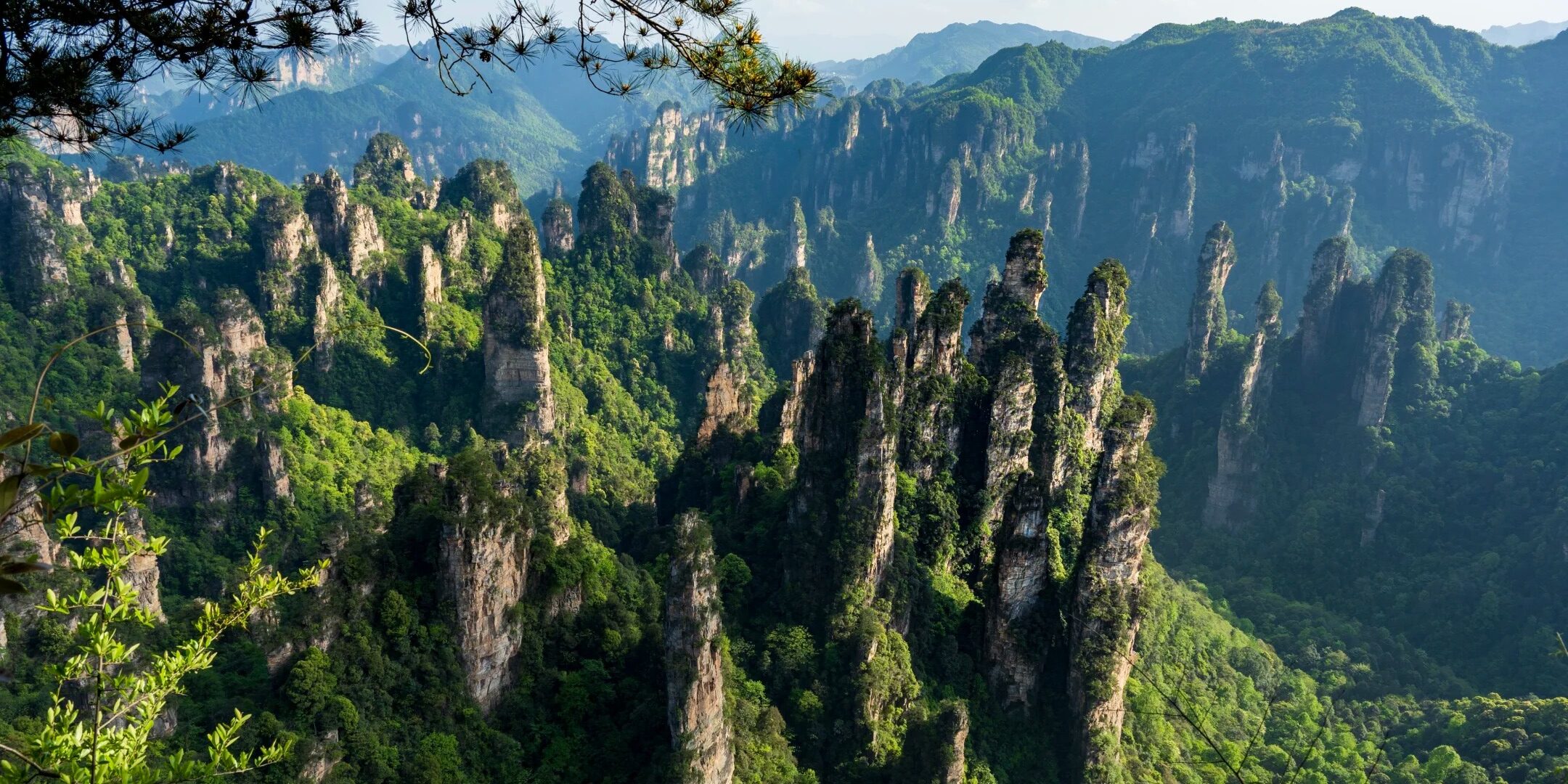
The signature landscape of Zhangjiajie National Forest Park is its quartz sandstone pillar forest. At the heart of the wider Wulingyuan Scenic and Historic Interest Area, a UNESCO World Heritage Site, more than 3,000 narrow pillars and peaks rise above ravines, streams and dense woodland. Some stand like isolated towers; others gather into long stone walls that seem to guard the valleys below.
Weather changes the mood of the mountains. In clear light, every ledge and tree is sharply defined. When mist moves in, the lower slopes disappear and the peaks appear to float. This is when the familiar comparison with Pandora feels most immediate, although the quiet rustle of forest and the immense depth between viewpoints remain entirely Zhangjiajie’s own.
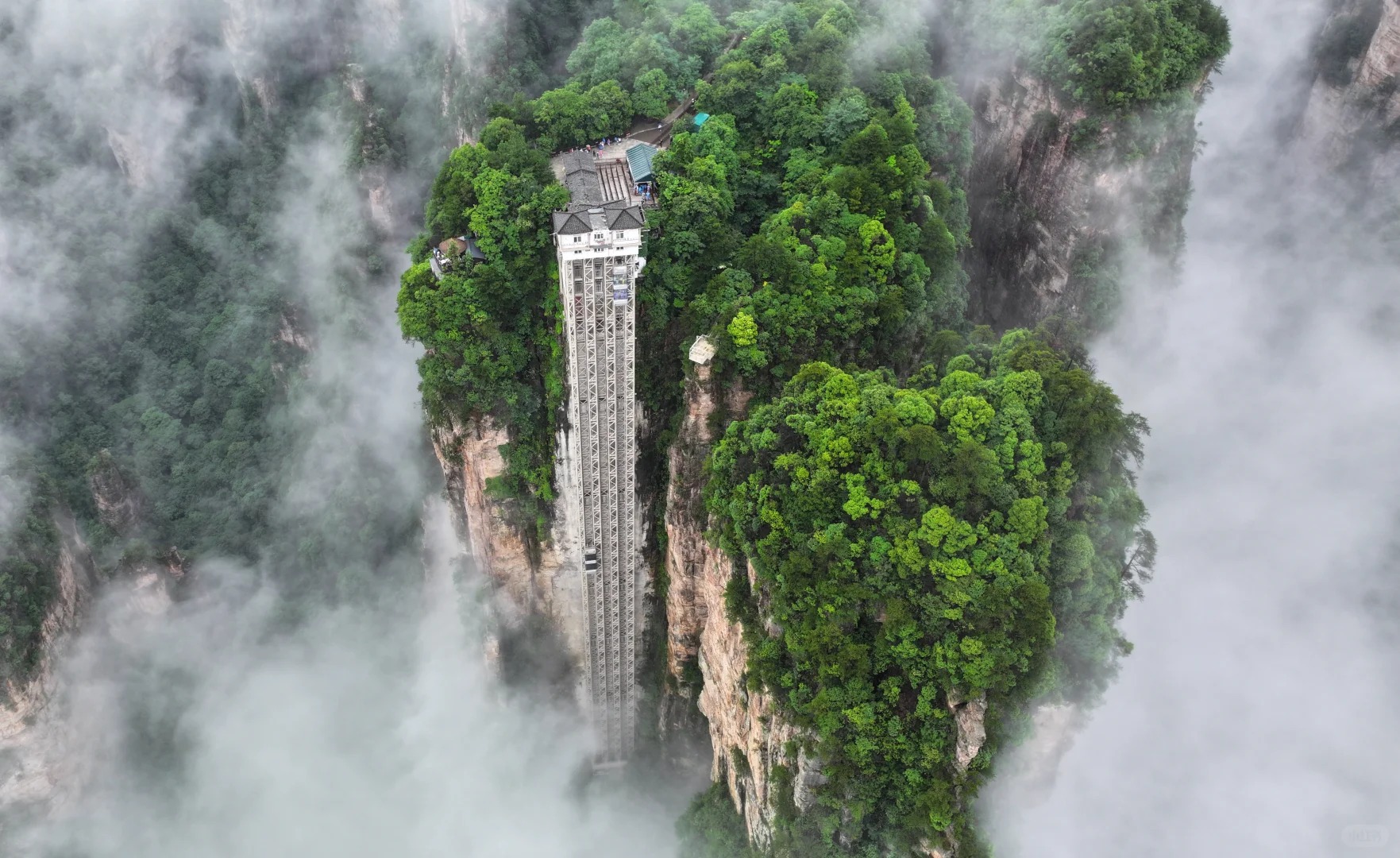
The Bailong Elevator adds a sudden vertical journey to the experience. Built against the cliffs, it carries visitors quickly from the valley level toward the viewpoints above. The transition is dramatic: forest and rock slide past the glass before the wider pillar landscape opens into view.
Tianmen Mountain – A Journey into the Clouds
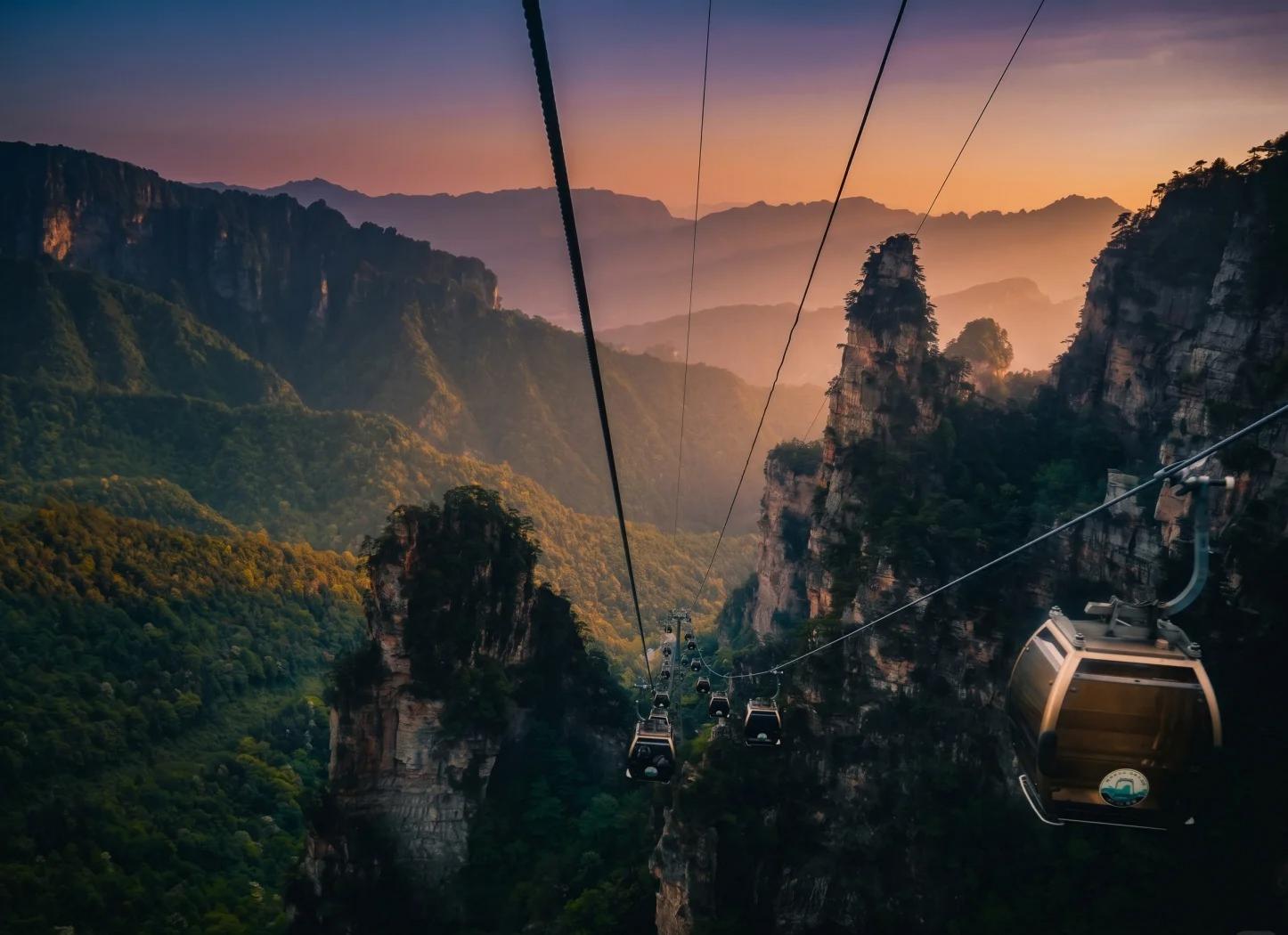
The journey to Tianmen Mountain is part of its appeal. As the cable car rises away from the city, the view expands across wooded slopes, sheer cliffs and distant ranges. The gradual ascent allows the landscape to unfold rather than arrive all at once.
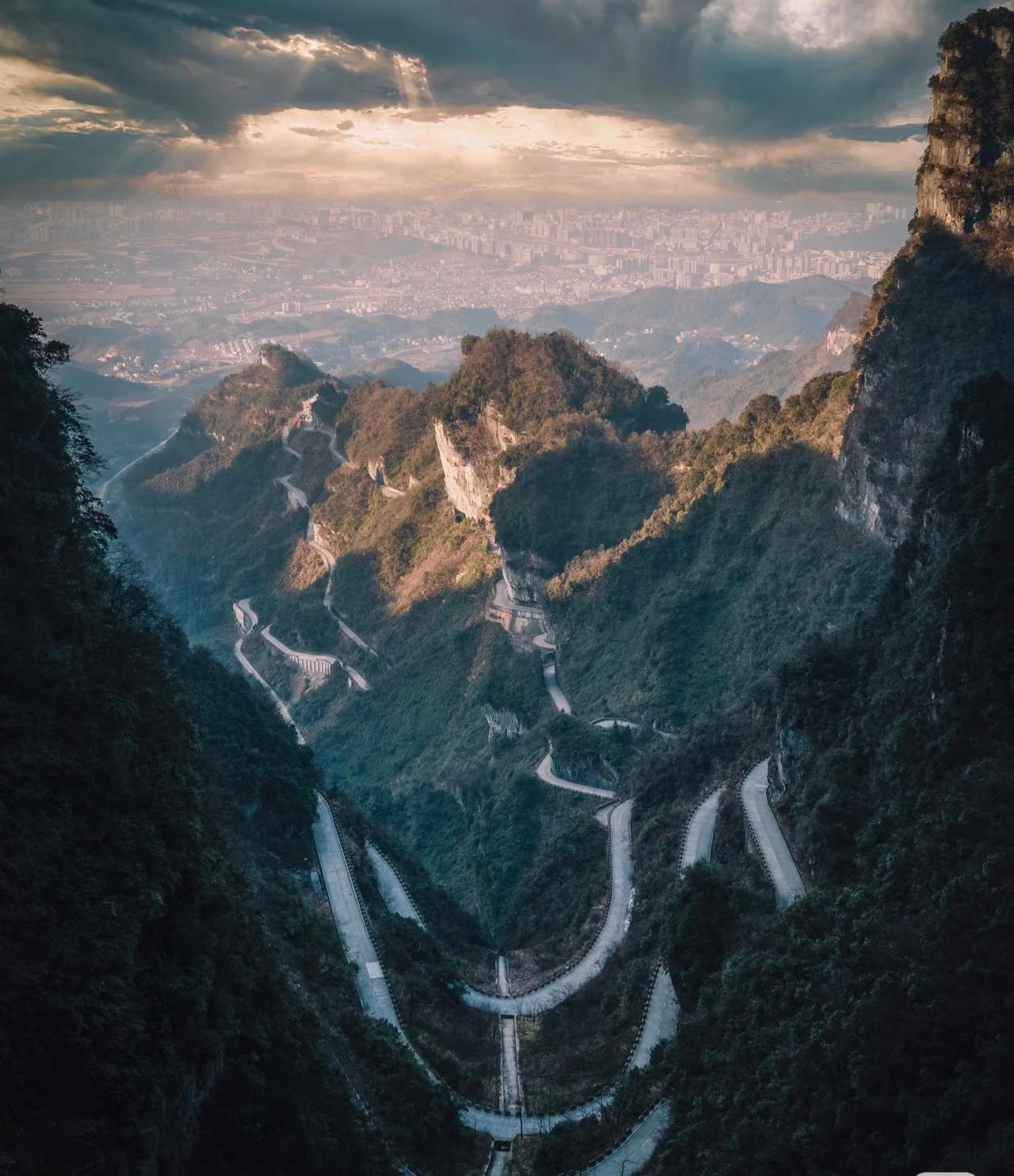
Below the mountain, the road known for its 99 bends traces a ribbon of tight curves across the steep terrain. From above, it reads almost like a drawn line, emphasizing just how abruptly the mountain rises from the surrounding landscape.
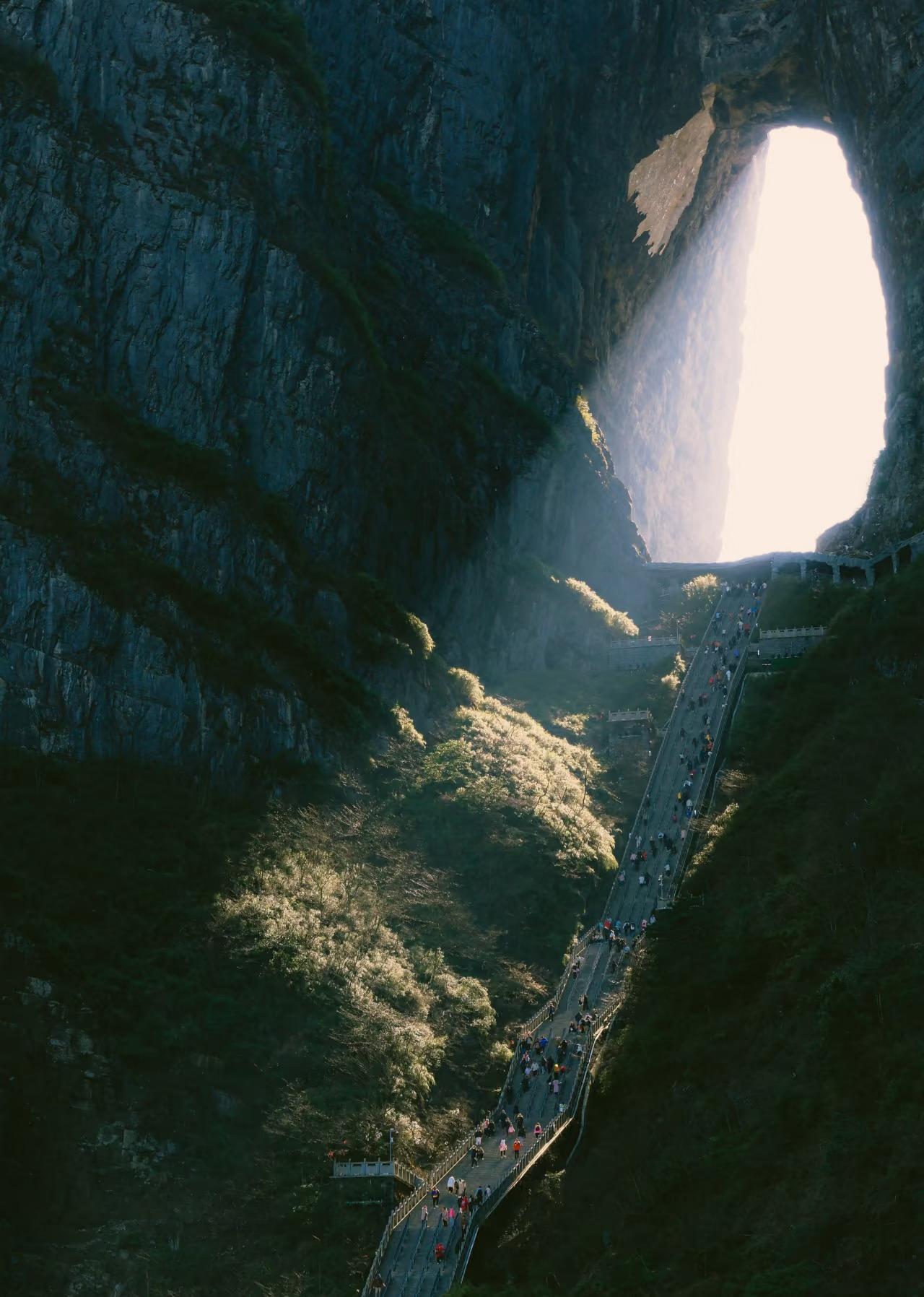
Tianmen Cave is the mountain’s defining landmark: a vast natural opening cut through the rock high above the valley. A long stairway leads toward it, and the changing light within the arch creates a powerful sense of moving between enclosed stone and open sky.
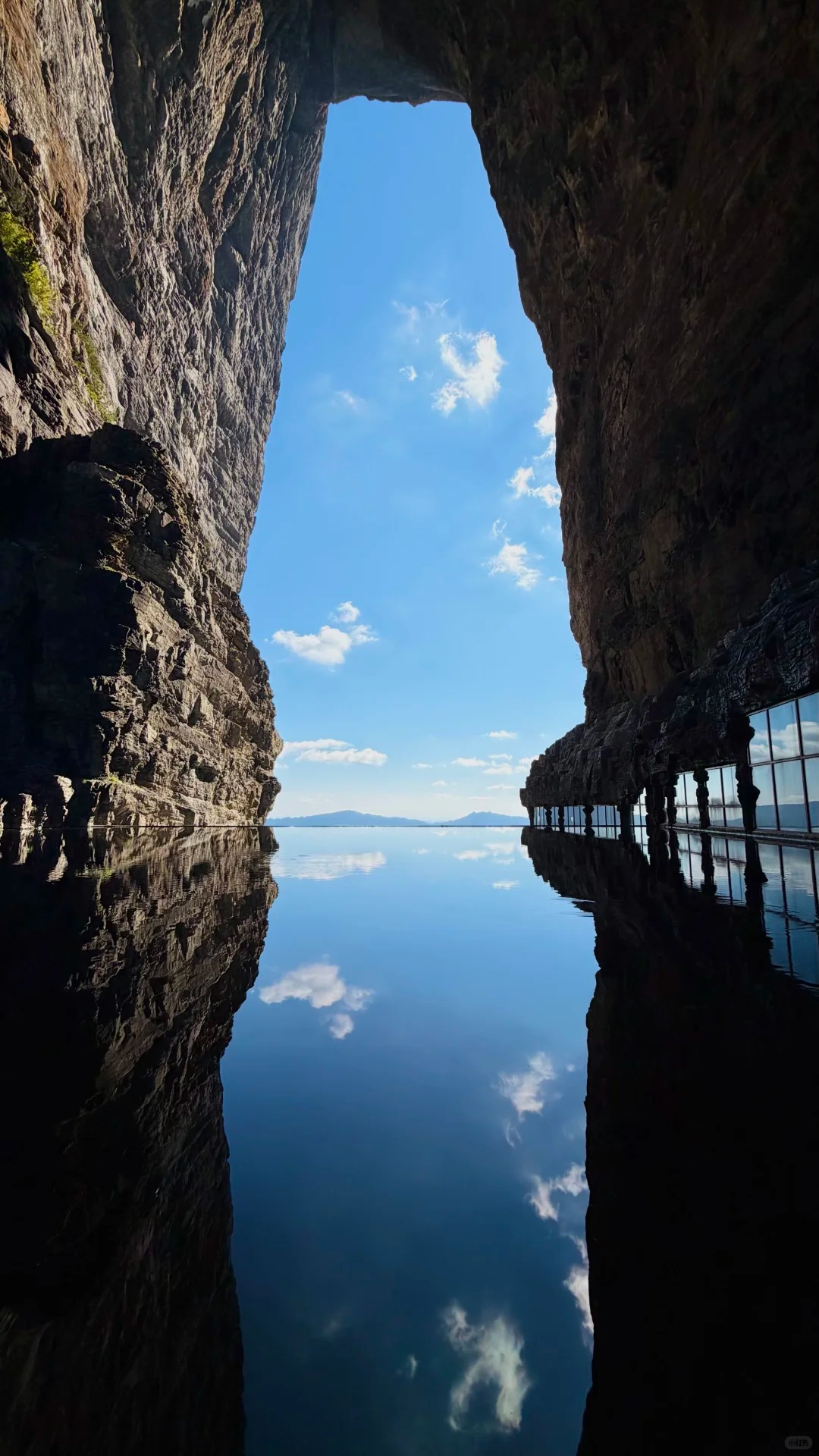
For travelers who enjoy a little more adrenaline, cliffside paths and glass walkways add another perspective. The appeal is not only the transparent surface beneath your feet, but the uninterrupted view across the mountain walls and valleys.
Zhangjiajie Grand Canyon – Crossing the Sky
Zhangjiajie Grand Canyon introduces a different kind of scale. Its glass bridge stretches between two sides of the gorge, placing the depth of the canyon directly beneath the crossing. The experience can be exhilarating, but the bridge is also a viewpoint: from the center, forested cliffs close around a narrow river far below.
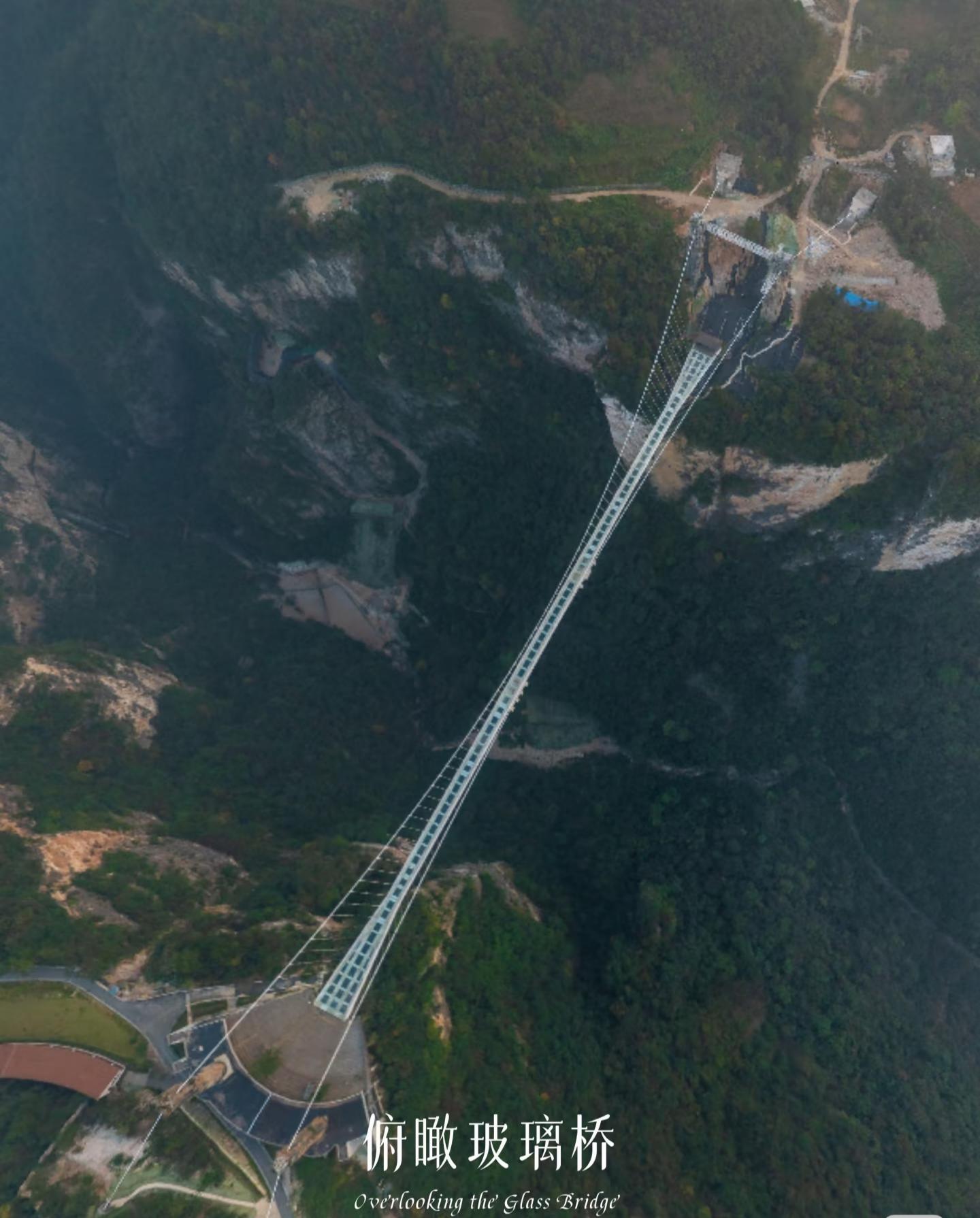
The canyon itself deserves time beyond the headline attraction. Paths descend toward green water, rock walls and thick vegetation, revealing a more intimate landscape of streams, small waterfalls and shaded passages. Seen from above and then from within, the gorge shifts from spectacle to a place of texture and sound.
Baofeng Lake – A Quieter Side of Zhangjiajie
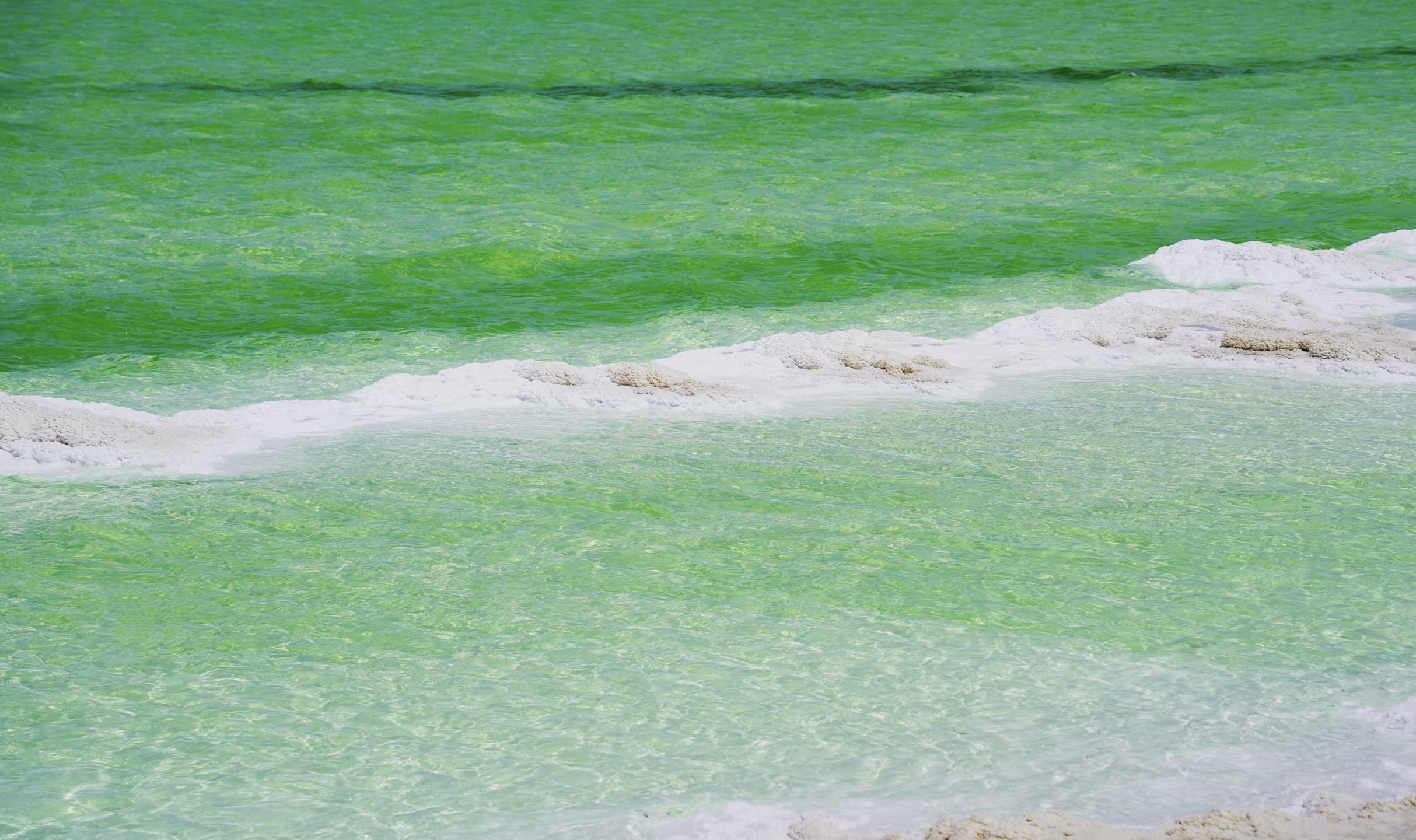
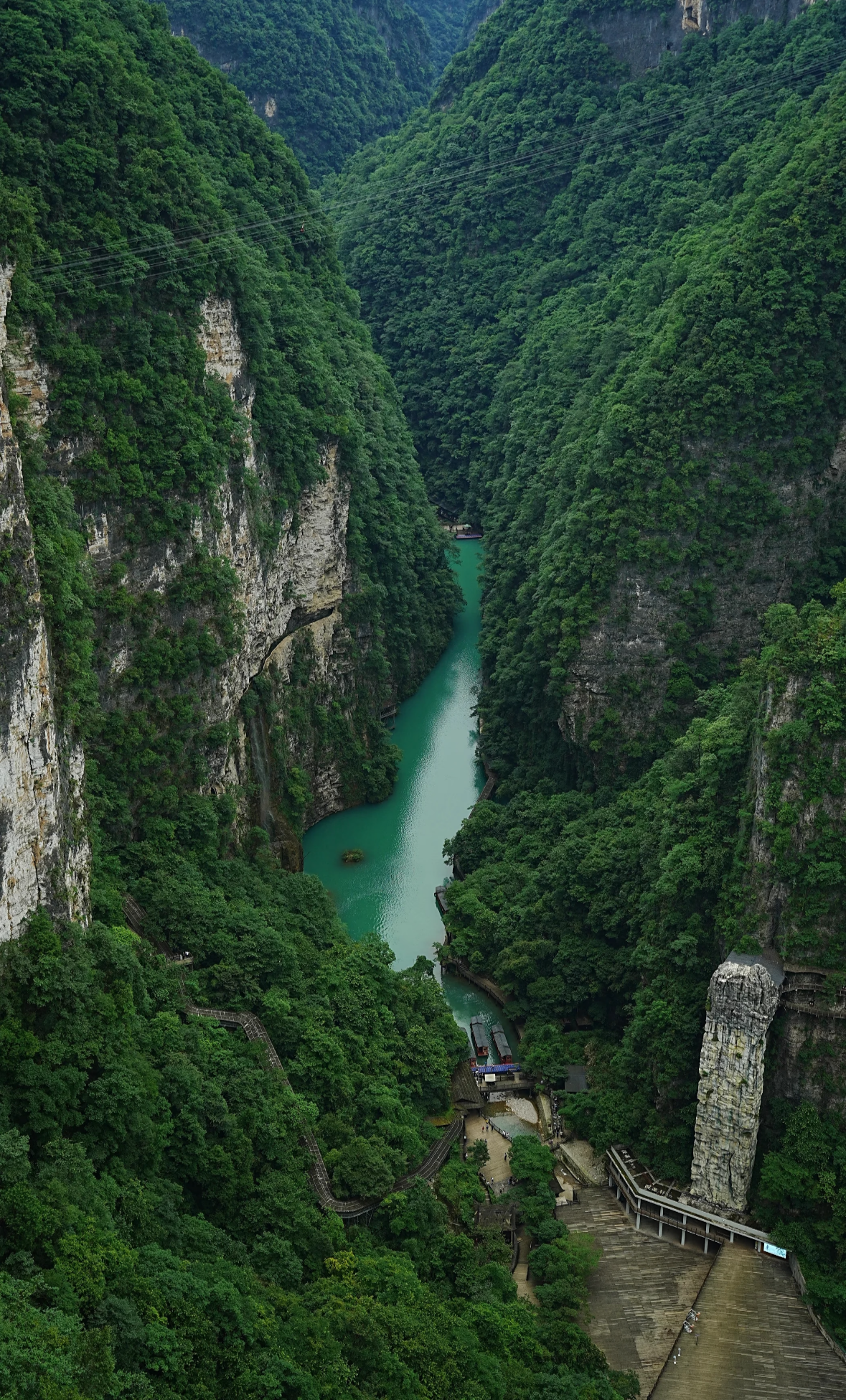
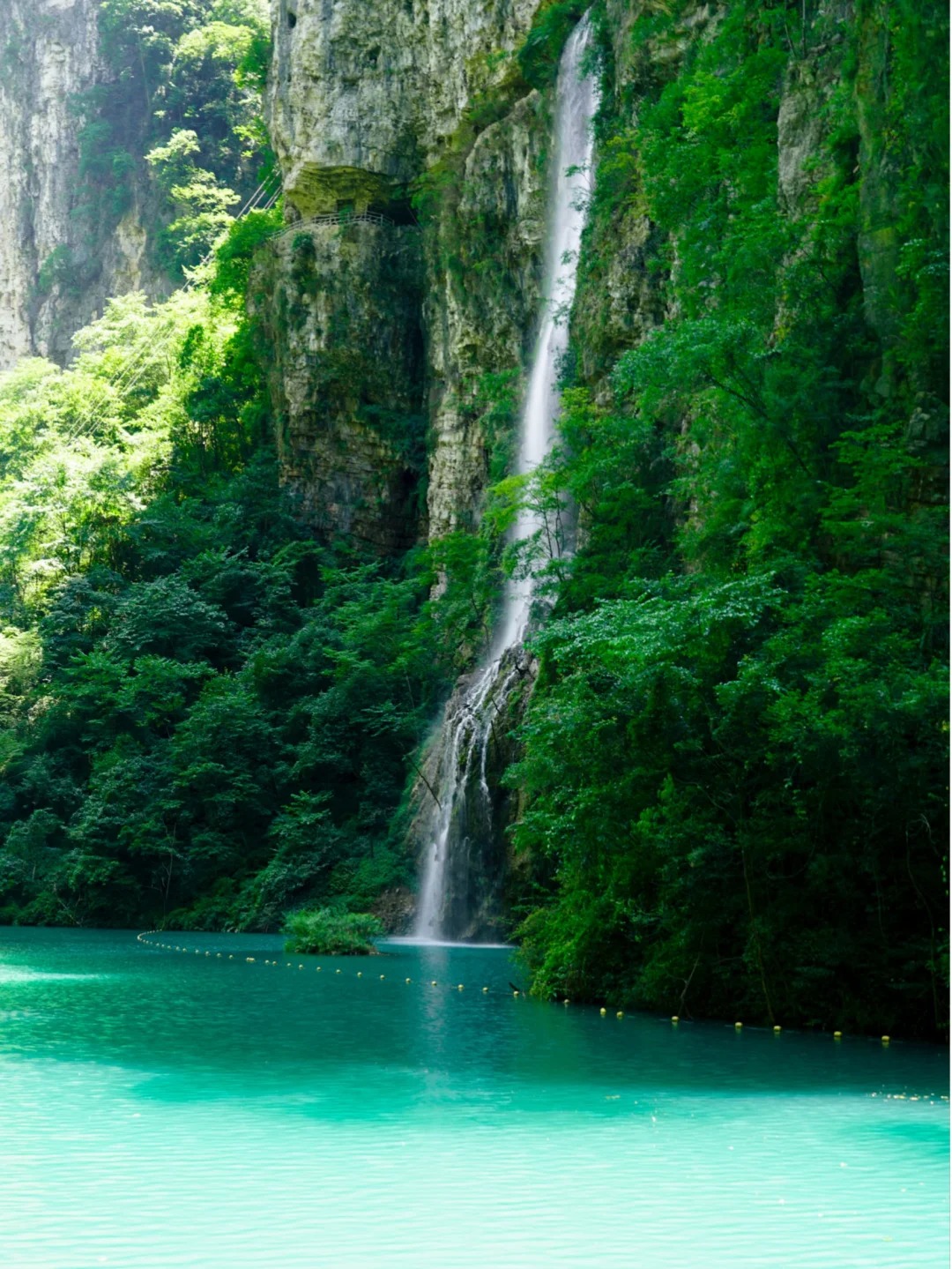
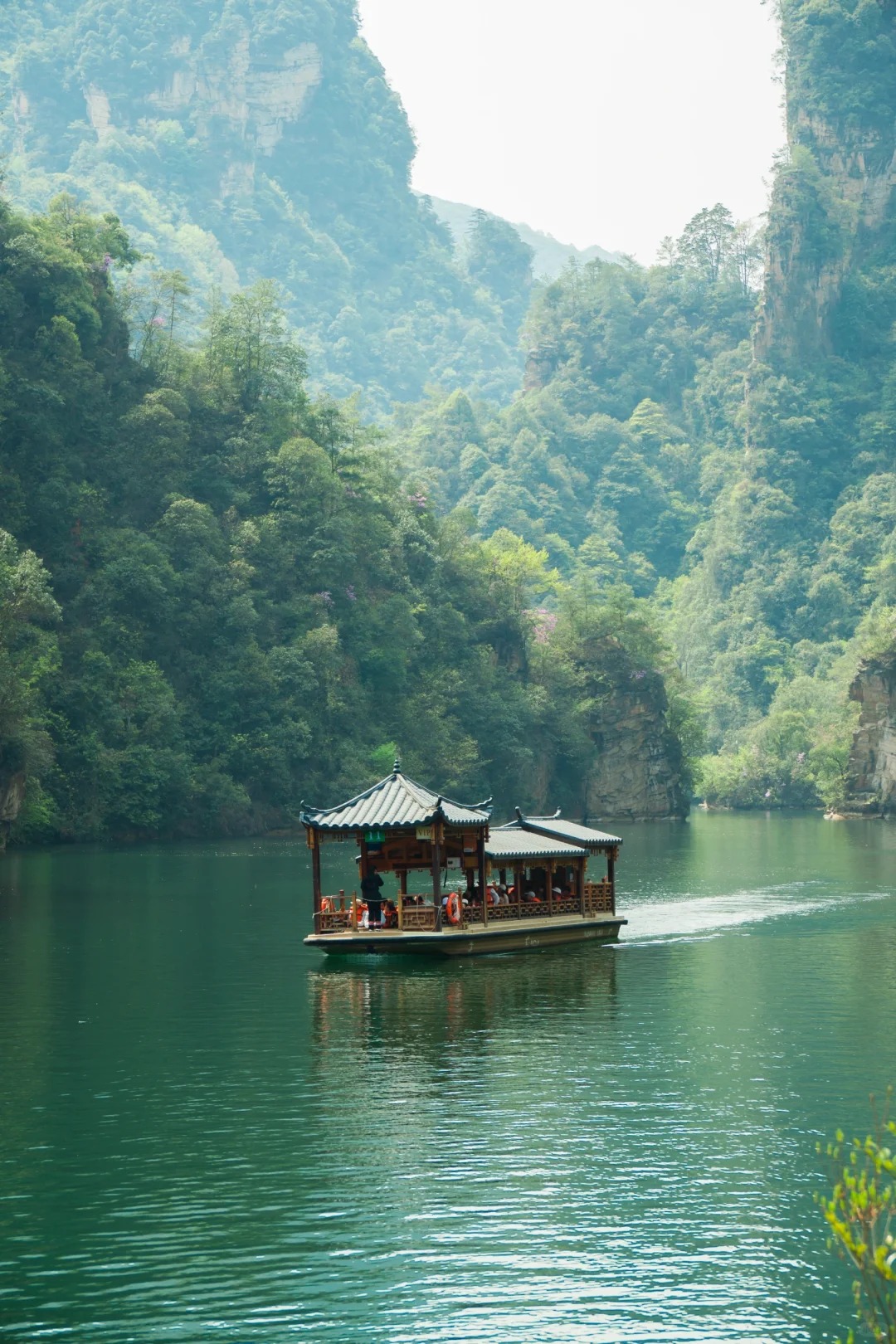
After the exposed heights and dramatic crossings, Baofeng Lake shows Zhangjiajie’s gentler side. Enclosed by forested peaks, the lake holds clear green water that reflects the surrounding cliffs. Waterfalls descend through the vegetation, and the atmosphere feels calm and self-contained.
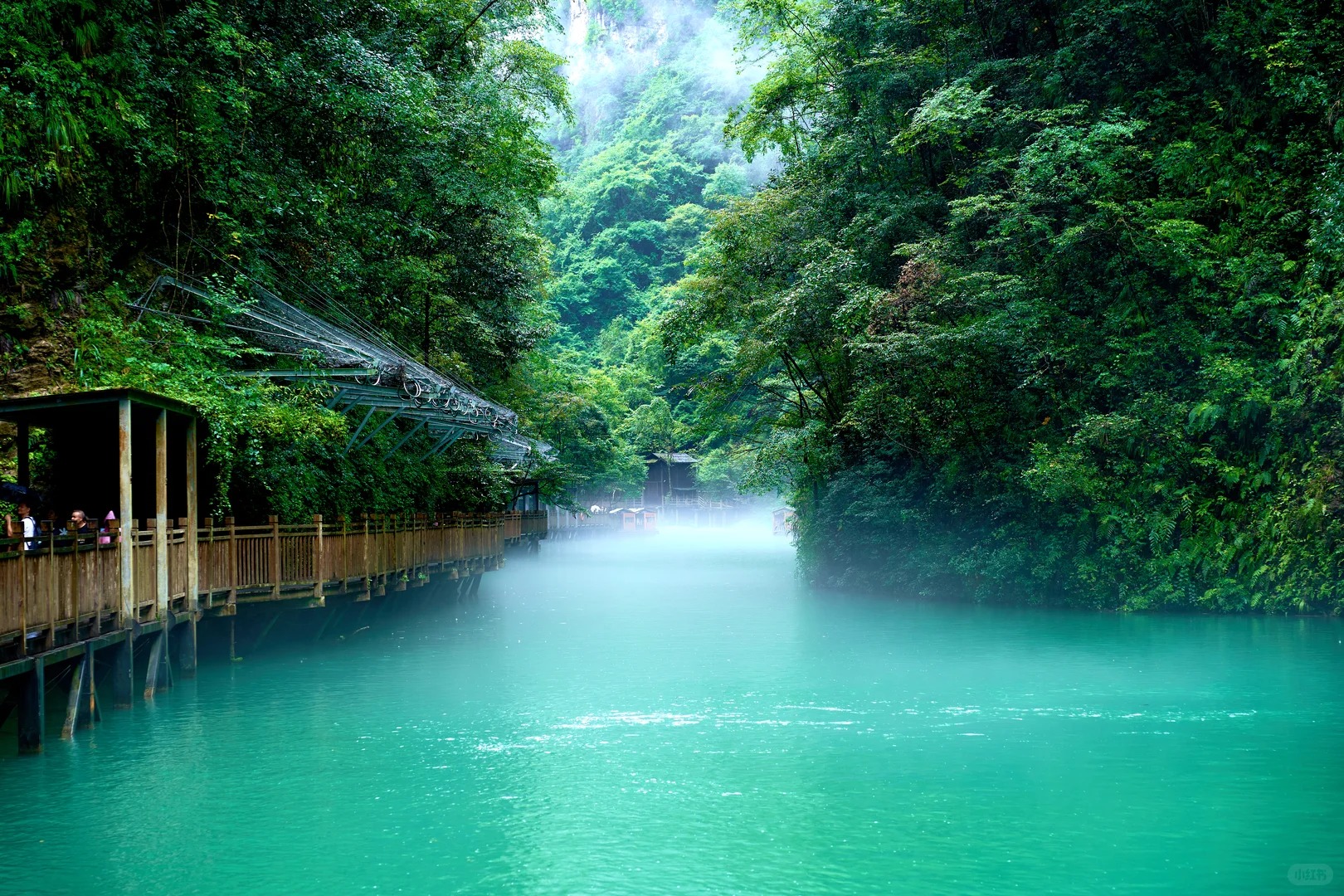
A boat ride offers the simplest way to take in this softer scenery. Moving slowly across the water, visitors can watch the shoreline, forest and rock formations pass in quiet layers. It is a useful pause in a destination otherwise known for height, speed and vertigo.
Zhangjiajie, Where the Landscape Feels Imagined
Zhangjiajie is more than a collection of dramatic viewpoints. It is a journey through changing relationships with the landscape: looking across a forest of stone, rising beside a cliff, walking above a canyon and finally slowing down on still water. That range makes it rewarding for first-time visitors to China, families, couples, photographers and travelers building a more personal journey.
For us at Canvas Journeys, Zhangjiajie captures the pleasure of seeing a familiar image become something richer in real life. The mountains may first call to mind a film, but the story you take home is shaped by mist, stone, forest and the moments you choose to notice – another China story painted in your own way.